How I Work
Good Press. The whole method, published. It isn't secret and it was never mine alone. But I've run it for two decades and I can show you where it worked.
The premise
There is one secret to getting attention you didn’t pay for. No budget makes up for missing it. No retainer buys you out of it. I have run it for twenty years, on everything from a chest wax to a Nasdaq relaunch, and it fits in four words.
Think like a reporter.
Before you picture somebody with a press badge: a reporter, today, is anyone with a feed. Since 2005, America has lost roughly 3,500 newspapers and three-quarters of its newspaper jobs, and attention did not shrink. It moved. First to the 200 million people who feed an audience on a schedule. Newsletter writers, podcasters, the person explaining your industry on TikTok. Then all the way down to everybody, because anyone with a share button files to the feed their friends actually trust. That is where the world gets its news now. Not from a front page. From feeds. And the feeds are fed by algorithms, whether we like it or not.
So thinking like a reporter is not a nostalgia act. It is the discipline of reading your own thing the way the feed will read it, and nobody can do that from the inside. Everybody is the model train guy about their own work. Every founder. Every owner. Every client I have ever loved. Me, about this website.
Here is the trade nobody explains to you. Everyone with an audience is in the same business, and it is not the helping-you business. It is the filling-tomorrow business. The beat reporter has a hole in tomorrow’s page. The creator has a feed that starts empty every morning. Your customer has a group chat waiting for something worth forwarding. Show up as one more ad and you are spam. Show up with the thing that fills tomorrow and you are the best part of their day. Same you. Same story. The difference is who the sentence was written for.
That is the whole secret. Attention is never granted. It is traded. You bring the story their audience wants. They bring the audience. And every story answers to two editors now. The human deciding whether you are worth repeating, and the machine deciding whether the human ever sees you. The secret did not age. It compounded. It used to open a few thousand doors. It now opens all of them.
Every story answers to two editors now. The human deciding whether you are worth repeating, and the machine deciding whether the human ever sees you.
So the question is never how do I get press. It’s:
What can I do at this step that makes this more useful to a journalist?
Two decades of answering that question is most of what I sell.
The whole method has a name. Good Press. Because good press is not luck, and it never was. It’s a system, and this page is the entire thing. Hook Check is its first working tool.
The think-like-a-reporter framing and the checklist below are adapted from publicityinsider.com, in a document dated 2007. The virality frame is Kevin Allocca’s, from a talk he gave in 2011. I’m not going to pretend I invented either one, and I’m not going to hide their age either. The age is the credential. These frameworks have survived the death of the local paper, four platform eras, and the arrival of machines that write, and I ran them through all of it, boots on the ground.
What I did invent is the merger. One framework tells you whether you have a story. The other tells you whether it will travel. I welded them into a single system, added the fifth reason, and ran it for twenty years until the results were provable and repeatable. The frameworks are borrowed. The system is mine, and every case on this site is its output.
The modernization is mine too. The frameworks froze in 2007 and 2011. The system never did. Every update on this page, each what changed, the field manual for this decade, the answer to the machines, is the system brought current for 2026 and beyond, the same way I have brought it current through every era before this one.
Part one · Is it actually news?
Before you write a word, find out whether you have anything. Run your idea through these fourteen questions. You need one honest yes. Two is a campaign.
- 01
Is it timely?What was news last week is wallpaper this week.
- 02
Is it innovative?A genuinely fresh approach to a real need.
- 03
Is it unusual or different?If there are ten like it, what's true of yours and nothing else?
- 04
Will it change somethingfor your customers or your community?
- 05
Could it affect public health or safety?
- 06
Could it affect the local economy?A small business expanding is real news in a small place.
- 07
Has it never been done beforeanywhere, or just never here?
- 08
If it's been done, why is it different this time?
- 09
Does it tie to something already in the news?
- 10
Does it tie to a trend?
- 11
Does it tie to a season or a holiday?
- 12
Is it information that didn't exist before?A survey, a study, a count nobody had run.
- 13
Does it have emotional appeal?Moving, funny, or inspiring. Pick one and commit.
- 14
Does it help someone make a decision or avoid a serious mistake?
Then rate every attribute of your thing honestly, in four buckets. This is the step people skip and it’s the step that works:
- NO DICENot newsworthy. Too common, too promotional, too boring.
- INSIDE STUFFReal to your industry or your existing members. Not to anyone else.
- GETTING THEREInteresting. Not meaty enough on its own.
- STOP THE PRESSESThe thing a journalist eats.
Most lists come back as four NO DICEs and a GETTING THERE. That’s not a failure. That’s a starting position. You combine the survivors into something tighter until it clears the bar.
Notice the questions never mention a channel. Not once. That is why a checklist older than the iPhone still runs. It interrogates the idea, not the medium, and the idea is the part the internet never changed. A story that clears these fourteen works on a front page, in a feed, and in the group chat where most sharing actually happens now.
You don’t have to run this out of a text file. Hook Check is these fourteen questions and these four buckets, live. It scores as you go, tells you which of your answers your headline is hiding in, and prints on one page if you’d rather do it in a room with other people. Free, no signup, and it works with the JavaScript off.
The same first step, run on your own life: The Headline of Your Life. Write the headline before you live the story.
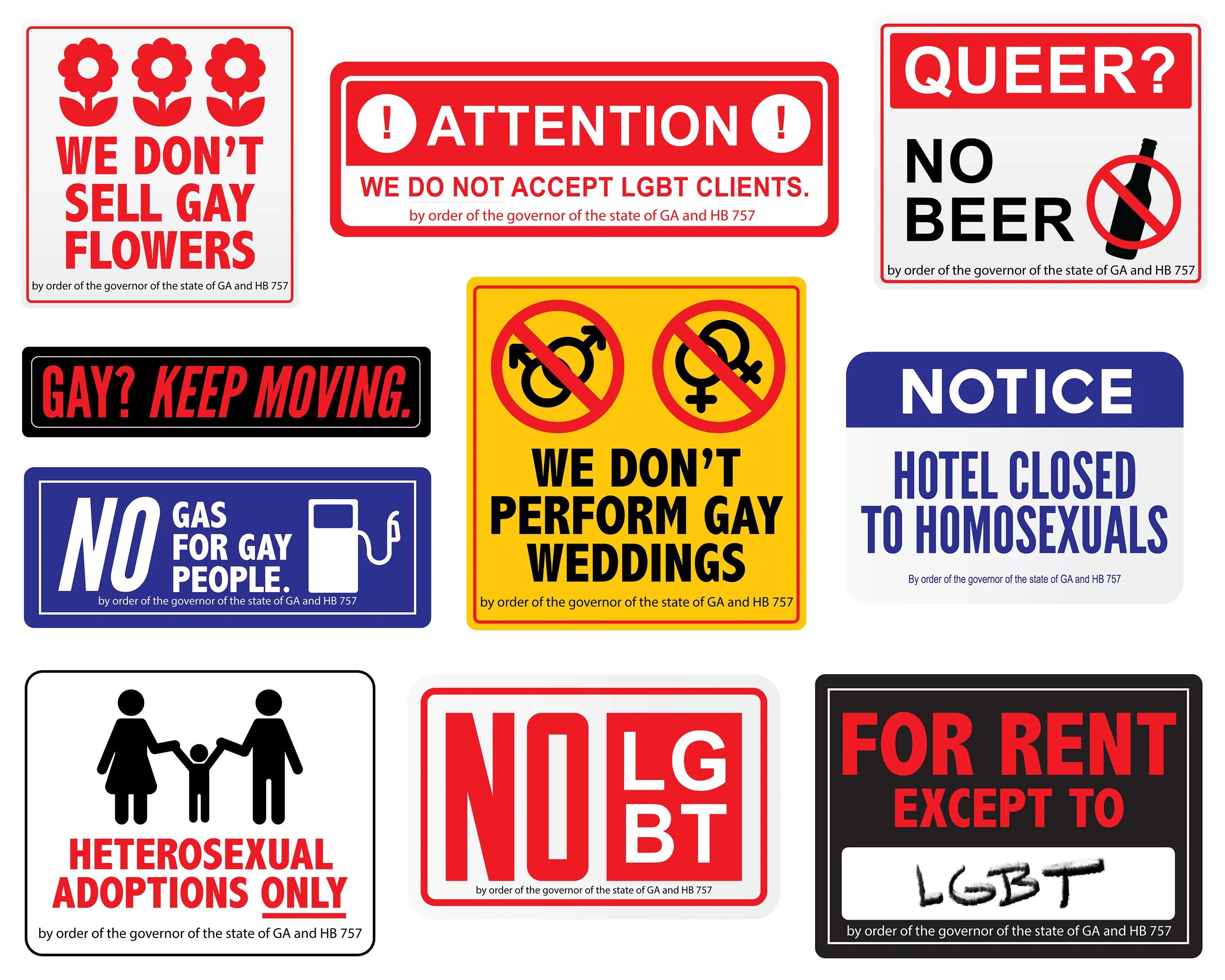
Stop HB757, run through the checklist. Timely: a bill was on the governor’s desk that week. Yes. Ties to news already running: it was the biggest story in the state. Yes. Unusual: a print shop openly selling discrimination signage. Stop the presses. Emotional appeal: yes, and not the comfortable kind. Never been done: yes.
Five yeses, one of them a STOP THE PRESSES. That campaign got covered by NBC, CBS, AdAge, Creativity and the AJC. The coverage was not luck. It was the checklist, run before we built anything, telling us we had something a newsroom would want.
Now the same checklist on a fake one. “Local agency announces new brand identity for regional utility.” Timely? No. Unusual? No. Affects anybody? No. Emotional? No. That’s four NO DICEs and it doesn’t matter how good the work is. There is no story in it. No amount of press release will manufacture one. Knowing that before you spend the budget is the entire value of doing this.
Part two · Why things spread
Getting covered and getting spread are different jobs. Kevin Allocca ran trends at YouTube and gave the clearest account of the second one. Four reasons things travel. He gave it in 2011, so under each one I’ve written what fourteen more years of watching things travel did to it. His four are below. The fifth is mine, and it took two decades of scar tissue to see it.
Tastemakers
Somebody with an existing audience introduces it, and the process accelerates. You are not trying to reach a million people. You are trying to reach the eleven people who can reach a million people, which is a completely different and much cheaper task.
Communities of participation
People don’t just enjoy it. They do something with it. Enjoyment ends. Participation compounds. If there’s no move for the audience to make, you’ve built a broadcast, and broadcasts cost money.
Unexpectedness
An unreasonable amount of video is uploaded every minute of every day. Being good is not a differentiator. Being surprising is. This is the one most brands quietly refuse to do, because surprising means somebody has to approve something they can’t fully predict.
Use what's already popular
Animals, babies, cute. Talent and skill. Funny, awkward, embarrassing. Celebrities. Nerdy things. Compilations. Spoofs and remixes. Tragedy and drama. Memes. This isn’t a cynical list. It’s a map of what people already turn their heads for, and you’re allowed to use it.
Visible cost
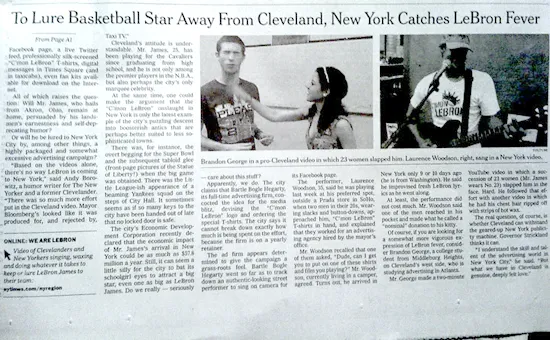
The fifth is mineThe one Allocca’s list doesn’t have, and the one every case on this site runs on. Nobody shares a claim. People share proof. Proof that somebody paid for something. Pain. Risk. Sleep. Dignity. I waxed my chest and took twenty-three slaps to the face, and the front page of The New York Times followed the pain, not the website. A fake sign company works because somebody clearly risked something to build it. A spot produced in forty-eight hours says the one thing no deck can say, which is look what they were willing to do.
The audience runs this math before they hit share, whether they know it or not: passing along something that cost you nothing spends their credibility on your laziness. Cost is the one signal on the internet that cannot be faked. That is exactly why brands refuse to pay it. It is exactly why it works. If your idea doesn’t cost you anything visible, add the cost before you add the budget.
And this is the reason that grew. Machines now make polish free. Anyone can generate a good-enough video, a good-enough essay, a good-enough brand, in thirty seconds, and audiences have noticed. The moment people learn a thing was machine-made, they trust it less and share it less, and the numbers on that get worse every year. Which means every signal except cost has stopped working. Pain cannot be generated. Risk cannot be prompted. A chest wax is not available as an export setting. The fifth reason used to be my edge. It is now the whole moat.
Nobody shares a claim. People share proof.
InLeBronWeTrust hit all five, which is why a student with no money ended up on A1. Tastemakers: it was built for an audience of one, and the sports press is a machine for amplifying anything LeBron might have seen. Participation: twenty-three challenges is an invitation, not a video. Unexpected: nobody expected a grown man to wax his chest about free agency. What’s popular: celebrity, sports, funny, and genuinely embarrassing, all at once. Visible cost: hot wax and twenty-three open palms. The pain was the press release.
Marcus Harvey hit three on a format you can repeat forever: don’t laugh, or you pay. The audience participates by daring their friends. It’s unexpected in a barbershop. And it runs on funny-and-awkward, which never stops working.
Part three · Writing it down
Once you have the angle, the writing is a solved problem. This is the shape. It’s the same shape every case on this site is built in, because if it’s good enough for a newsroom it’s good enough for a portfolio. And the shape is not print-bound. The headline that states the most interesting thing in the fewest words is what a feed calls a hook. The lede that gives a reporter everything is what a group chat calls the message worth forwarding. Write it once. It works everywhere.
- 01
The headline.
State the most interesting thing in as few words as possible. Emulate actual newspaper headlines. Not LOCAL SYNAGOGUE PLANS FUNDRAISER TO HONOR RABBI. That's your press release. RABBI RECOGNIZED FOR LIFETIME OF SERVICE is theirs. The difference is whose interests the sentence serves.
- 02
The deck.
One line under it that flushes out the angle without stepping on the drama of the headline. Almost everybody skips this and it's the most useful line in the document.
- 03
The lede.
Who, what, when, where, how. If a reporter read only this, they'd have enough to start writing. No hype, no sell, no throat-clearing. Just the facts, in the order that makes them land.
- 04
The support.
Everything backing the claims you just made. Enough to prove you didn't slap this together. A quote from someone with standing helps here more than another adjective.
- 05
The boilerplate.
A block of standard text about who you are, reused every time, sitting right above the ###.
And the rules under all of it:
- Kill breakthrough, unique, state-of-the-art, revolutionary, and every one of their cousins.
- Write it from the journalist’s side. Never I or we outside a quote.
- Read a lot of good newspaper writing. The style is learnable and almost nobody bothers.
- Shorter is better. Two pages is fine. One page is better.
Part four · The etiquette
The best angle in the world dies against bad manners, and this is the part nobody teaches because it isn’t glamorous. The manners have not changed in twenty years. The channels have. In 2025, Muck Rack asked 1,890 working journalists how they actually want to be approached, and the answers are a gift. They told you exactly how to do this.
One person, one email.
Sixty-two percent of journalists prefer a personal email over every other channel. Not a blast. Not a press-kit carpet bombing. One person you chose on purpose, addressed like you've read their work, because you have. They can smell a mail-merge in the first line, and it's the smell of somebody who doesn't believe what they're saying.
Read their last five pieces first.
The fastest way into the bin is pitching somebody a story they don't cover. It is also the single loudest complaint working journalists have, year after year, and it's the easiest one to never earn.
Under three hundred words.
The headline, the deck, and the offer of more. If the pitch doesn't fit in three hundred words, you haven't found the angle yet. Go back to the fourteen questions.
Respect the deadline.
It used to mean don't call after 2pm. Now it means Tuesday morning beats Friday afternoon, and their publish day is not your day.
Follow up once. Maybe twice.
Three to six days apart. Then stop. Silence is an answer, and pestering turns a maybe into a never.
Don't cold call.
The phone call is what the fax machine was. Proof the playbook hasn't been updated. The old exception still holds: once they've asked for more, checking in is not rude. It's the job. Have it ready and send it immediately.
Give them a story, not an ad.
Unchanged since 2007, true in 2107. Nobody's audience exists to publicise you.
Creators are press.
The newsletter writer, the podcaster, the niche YouTuber, the moderator. Same rules, same manners, same fourteen questions. Their editor is their audience, and that editor is meaner than any city desk ever was.
What this adds up to
Every case on this site is the same story with different props: the right words, aimed at the right person, at the right moment, moved something that money couldn’t move.
A student with a camera got on the front page of The New York Times. A print shop that didn’t exist changed a governor’s mind. Eight CDs burned overnight won a utility account. None of that is talent, exactly. It’s a method, run patiently, by somebody willing to do the embarrassing part.
The props changed four times while I ran it.
- 01Newspapers
- 02Facebook
- 03Instagram
- 04Feeds a machine curates
The method never noticed.
It doesn’t target a channel. It targets the one thing every era shares. A human being, deciding whether you are worth their next thirty seconds.
Good Press is the one product I own outright. No client’s logo on it, no platform able to take it away. Most products this useful cost money. This page is the free sample. The paid version is me.
Download Good Press as a fillable PDF
Every step in one file, with a one-page run sheet at the back. Free, no email gate. Print it for every new idea.
You can run it yourself. Most of my career has been running it for people who’d rather not.
I taught a version of this to 200+ students at the Creative Circus over nearly a decade. If you’d rather have the class than the article, or you want me to run it on your thing, that’s Start Something.