← Dispatches On the inside view
Everybody is the model train guy
You can't find the hook in your own thing, and it isn't because you're not smart. It's because you're standing inside it.
· 1,320 words · Brandon George
You know the guy with the model trains. Somebody says the word basement at a party and forty minutes later you have learned about HO scale, and about a bridge he built twice because the first one was wrong in a way you cannot see, and you are looking at the door.
Every business owner is that guy about their business. Every founder. Every marketing director, every creator with a good product and nine views, every nonprofit with an actual crisis on its hands. Not because they’re boring people. Because they’re inside it, and from inside it every fact weighs the same.
That’s the whole problem, and it’s worth being precise about it, because most people misdiagnose it as a writing problem and buy a writer.
Proximity, not ego
Here’s what being on the inside actually does to you.
You know two hundred things about your thing. You know the origin, the pivot, the supplier who nearly sank you, the feature nobody uses that you’re still proud of, the number that went up last quarter. All two hundred feel load-bearing, because you paid for each one with a piece of your life.
To a stranger, one hundred and ninety-nine of them are wallpaper and one of them is a story. You cannot tell which one. Not won’t. Can’t. The information that would let you rank them is the information you lost the day you started caring.
This is why the press release you wrote yourself leads with the founding date.
The stranger’s question is the campaign
The tell is always the same. Somewhere in your two hundred facts there’s one that makes a person who has no stake in you stop and go wait, what? That reaction is the entire asset. Everything else is support.
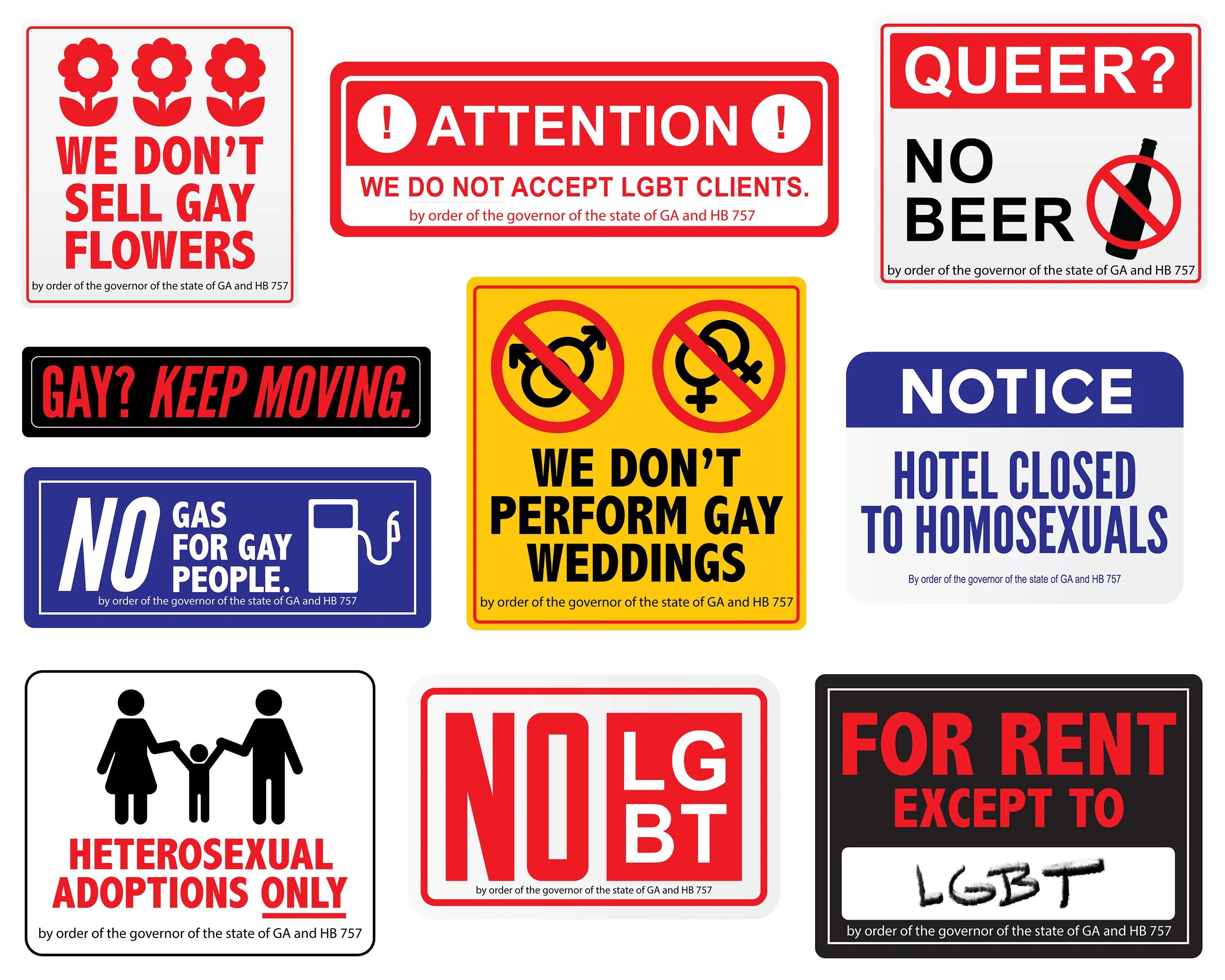
Stop HB757. Everybody opposed the bill. Opposition was not news. Opposition was the weather that week. The fact that made a stranger’s head come up was a print shop openly taking orders for the signage the bill would make legal. Wait, that’s allowed? Yes. That was the point, and that question is what NBC, CBS, AdAge, Creativity and the AJC each ran with in their own words. The governor reversed himself and vetoed it.
InLeBronWeTrust. A student made a video. So did four million other people that year. The fact that stopped a stranger was a grown man waxing his chest on camera to get one specific person’s attention. That person was, at that moment, the biggest story in American sports. That ran on the front page of The New York Times.
Neither of those hooks is the most important fact about either project. Both are the most repeatable one. Those are different jobs and only one of them travels.
The dinner-party test
Here is the cheapest version of the whole discipline, and you can run it tonight.
Say your idea out loud in one sentence, to somebody who is not paid to be nice to you, and watch whether they repeat it to the next person who walks up.
If it can’t be repeated, it was never going to spread. Not because the world is shallow. Because a story moves by being retold, and every retelling is somebody betting a little of their own social credit on your sentence being interesting. Make the bet easy.
The internet made this test literal. Most sharing now happens where nobody can see it. Group chats, DMs, one person handing a link to six people they actually know. Your idea travels as a forwarded message or it does not travel. The dinner party was never a metaphor. It just moved to the phone.
Most ideas fail this test on the first try. That’s not a verdict on the idea. It’s a verdict on which fact you led with, and you get to pick again.
Three ways to stand outside your own thing
Write the headline before you make the thing. Not a working title. A real one, in a newspaper’s voice, about the thing that hasn’t happened yet. A feed calls the same sentence a hook, so it pays twice. If you can’t write a headline a stranger would click, you don’t have it, and finding that out costs you an afternoon instead of a budget. This is the single highest-leverage hour in any project I’ve ever run.
Ask somebody who doesn’t care. Not your team. They’re inside it with you. Not your partner. They love you and it shows. Find somebody with no stake, tell them, and don’t watch their mouth, watch their eyes. You’ll see the exact clause where they left.
Run a checklist that has no feelings. This is the outsourced stranger, and it’s the one you can do at 11pm without bothering anybody. Fourteen questions, asked in the same flat tone every time, that don’t care that you love it. I’ve run it for two decades and taught it for ten years, and the reason it works is not that the questions are clever. It’s that they are not yours. They were written by somebody who never met your thing. They are also older than the iPhone, and they have held through every platform era since, because they interrogate the idea and ideas are the part that didn’t change. And no, a chatbot is not the same move. The machine is trained to be encouraging, and encouraging is the last thing you need at this step.
Being able to run this on other people’s work is most of what I sell. Being unable to run it on my own is a permanent condition, and it doesn’t improve with experience.
I am also the model train guy
Exhibit A is the website you are currently reading.
For fifteen years my only positioning line, all hustle, all heart, always, sat in a meta description tag. Machines could read it. People could not. A copywriter’s homepage, with no words of persuasion anywhere on it, and a career’s worth of proof filed behind two-hundred-pixel thumbnails.
I don’t want to tell you I didn’t know better, because I teach this. What happened is duller and much more common: it was my site, I had looked at it nine hundred times, and from in here it looked fine. Every fact on it felt load-bearing to me. I could not tell you which one a stranger would repeat, because I was the last person alive who could.
It took somebody with no stake in it reading the whole thing cold and asking why a guy who sells sentences had put his best one where nobody could see it.
So this page is the fix, and the fix started with a stranger’s question. That is the same thing I’ve been telling clients for two decades and the same thing I was too far inside to do for myself. Not a lecture from a hill. A guy who just climbed out of the hole, telling you it’s a real hole.
What to actually do next
Take one thing you want people to notice. Not the whole company. One thing. The launch, the number, the hire, the stunt, the thing you finished in March that nobody clapped for.
Then run it past fourteen questions written by somebody who has never heard of you, and see which of your two hundred facts survives contact with a stranger.
One honest yes is a story. Two is a campaign. Zero is the most useful afternoon you’ll spend all quarter, because it tells you to go change the thing rather than spend money describing it.
The long version of this is Good Press, the whole system, published free: why a reporter behaves the way they do, the four reasons things spread, how to write it down, and the etiquette that keeps a good angle from dying against bad manners. If you’d rather hand me the thing and have me run it, that’s Start Something.
All hustle. All heart. Always. Got something you want made real? Start something →